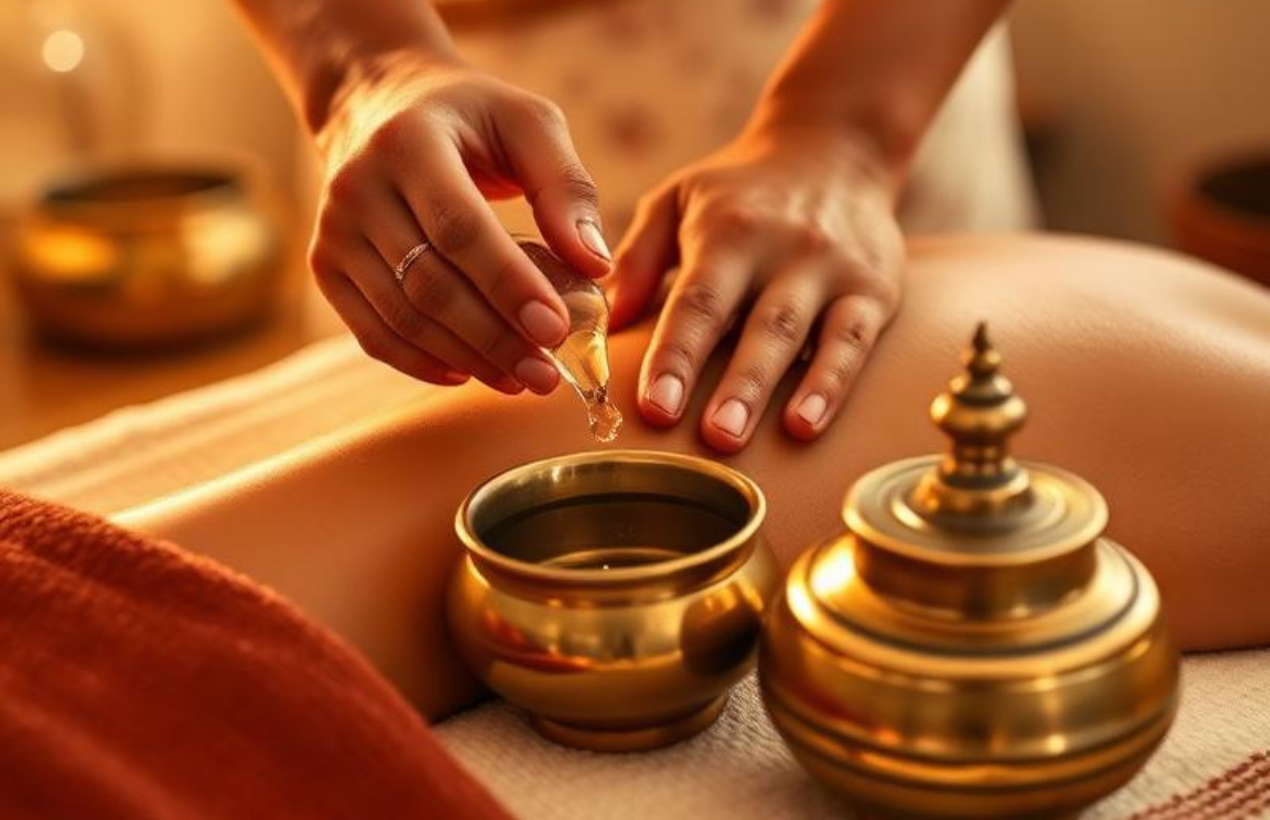
Abhyanga, the practice of massaging the body with warm oil, is considered one of the most nurturing therapies in Ayurveda. This daily ritual not only improves circulation and skin health but also calms the nervous system.
The Science of Abhyanga
According to Ayurvedic texts, regular oil massage: – Nourishes the seven tissues (sapta dhatus) – Balances Vata dosha throughout the body – Strengthens the immune system – Promotes longevity and vitality
Physical Benefits – Improved circulation and lymphatic drainage – Enhanced skin texture and elasticity – Joint lubrication and flexibility – Muscle tone and strength – Better sleep quality
Mental and Emotional Benefits – Reduced stress and anxiety – Enhanced mood and emotional stability – Improved concentration and mental clarity – Greater sense of self-love and care
Choosing the Right Oil
For Vata Constitution: – Sesame oil (warming and grounding) – Almond oil (nourishing and heavy) – Castor oil (for specific therapeutic needs)
For Pitta Constitution: – Coconut oil (cooling and soothing) – Sunflower oil (light and cooling) – Brahmi oil (calming for mind)
For Kapha Constitution: – Mustard oil (warming and stimulating) – Corn oil (light and penetrating) – Eucalyptus oil (energizing blend)
Proper Abhyanga Technique
Preparation: – Warm oil to comfortable temperature – Choose quiet, warm space – Allow 15-20 minutes for the practice
Application Method: 1. Start with the scalp using circular motions 2. Move to face and ears with gentle strokes 3. Use long strokes on limbs, circular on joints 4. Massage abdomen in clockwise direction 5. Include feet and between toes
Direction Guidelines: – Toward the heart for circulation – Away from heart for detoxification – Circular movements on joints and rounded areas – Long strokes on straight bones
Daily Practice Routine
Morning Abhyanga (Recommended): – Practice on empty stomach – Allow oil to absorb for 15 minutes – Follow with warm shower – Use mild, natural soap
Evening Abhyanga (Alternative): – Practice 2 hours before sleep – Focus on feet and scalp – Use calming oils like lavender – No need to shower afterward
Avoid abhyanga during: – Acute illness or fever – Immediately after meals – During menstruation (light application only) – Open wounds or skin infections
This ancient practice transforms self-care into a sacred ritual, nurturing both body and soul while maintaining optimal health and vitality.






Comments are closed