Healthy, radiant skin is more than just a matter of appearance—it is a reflection of your overall health and well-being. As the body’s largest organ, the skin acts as a protective barrier against harmful microorganisms, environmental pollutants, and physical injury while helping regulate body temperature and maintaining hydration.
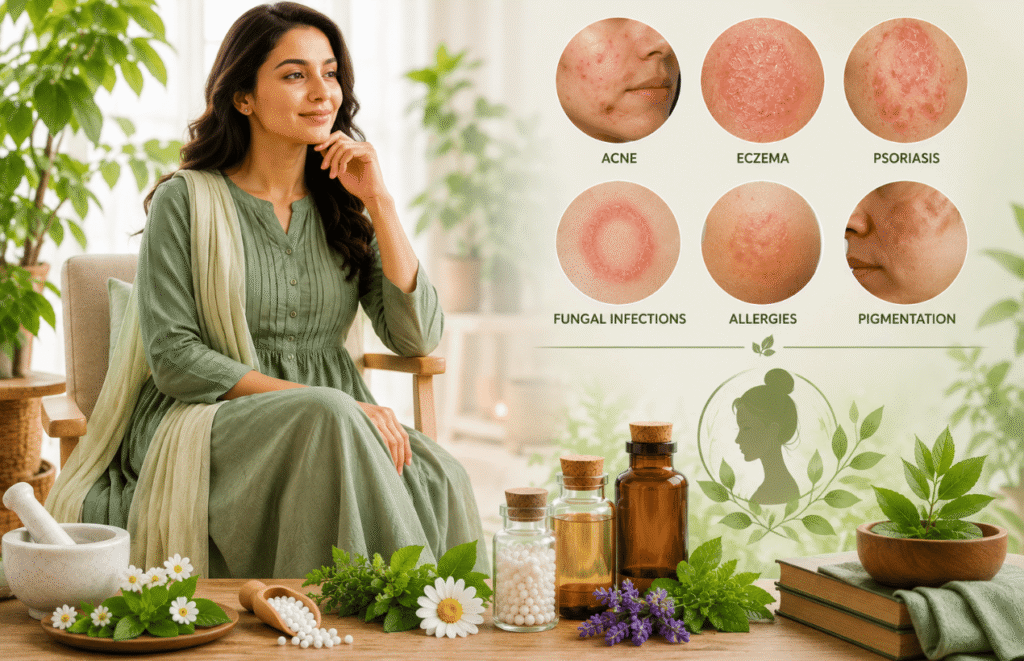
Despite its resilience, the skin is vulnerable to a variety of conditions that can affect people of all ages. Problems such as acne, eczema, psoriasis, fungal infections, allergies, and pigmentation disorders can impact not only physical comfort but also confidence and quality of life.
Homeopathy takes a holistic and individualized approach to skin health, focusing on understanding the person as a whole rather than simply treating the visible skin condition. In this blog, we’ll explore common skin problems, the factors that influence skin health, and how homeopathy may support overall skin wellness.
Why Is Healthy Skin Important?
The skin performs several vital functions that help keep the body healthy.
It helps to:
- Protect the body from bacteria, viruses, and environmental pollutants
- Regulate body temperature
- Prevent excessive water loss
- Support the immune system
- Provide the sense of touch, temperature, and pain
When the skin becomes unhealthy, it may cause discomfort, irritation, emotional stress, and reduced self-confidence.
Common Skin Conditions
- Acne
Acne is one of the most common skin conditions, affecting both adolescents and adults.
Symptoms may include:
- Pimples
- Blackheads
- Whiteheads
- Painful cysts
- Oily skin
- Acne scars
Hormonal changes, genetics, stress, diet, and certain cosmetic products may contribute to acne in some individuals.
- Eczema (Atopic Dermatitis)
Eczema is a chronic inflammatory skin condition characterized by dry, itchy, and irritated skin.
Common symptoms include:
- Dryness
- Intense itching
- Redness
- Cracked skin
- Thickened patches from repeated scratching
- Recurrent flare-ups
Avoiding known triggers and maintaining a consistent skincare routine can help manage symptoms.
- Psoriasis
Psoriasis is a chronic inflammatory condition that causes skin cells to multiply more rapidly than normal.
Symptoms may include:
- Thick, scaly patches
- Red, inflamed skin
- Dry or cracked skin
- Itching or burning
- Scalp involvement
- Nail changes
The severity and frequency of flare-ups vary from person to person.
- Fungal Skin Infections
Fungal infections commonly affect warm and moist areas of the body.
They may present with:
- Circular rashes
- Redness
- Itching
- Scaling
- Skin peeling
- Nail discoloration or thickening
Proper diagnosis is important to ensure appropriate treatment.
- Allergic Skin Reactions
The skin may react to allergens or irritants such as:
- Cosmetics
- Soaps and detergents
- Dust
- Pollen
- Certain foods
- Insect bites
- Metals such as nickel
Common symptoms include:
- Redness
- Itching
- Swelling
- Hives
- Skin rashes
Identifying and avoiding the trigger is an important step in managing allergic skin conditions.
- Dry Skin
Dry skin is a common concern that may occur due to weather changes, frequent washing, ageing, dehydration, or prolonged exposure to air-conditioned environments.
Symptoms include:
- Rough skin
- Tightness
- Flaking
- Itching
- Fine cracks
Daily moisturization and adequate hydration can help maintain the skin’s natural protective barrier.
- Pigmentation Disorders
Changes in skin pigmentation may develop due to several factors.
Common causes include:
- Sun exposure
- Hormonal changes
- Previous acne
- Skin injury
- Ageing
Using sunscreen regularly and protecting the skin from excessive sunlight are important preventive measures.
What Factors Affect Skin Health?
Healthy skin is influenced by many internal and external factors, including:
- Hormonal changes
- Stress and emotional well-being
- Nutrition
- Genetics
- Sleep quality
- Climate and environmental conditions
- Certain medications
- Underlying medical conditions
- Daily skincare habits
Understanding these factors helps create a more comprehensive approach to maintaining healthy skin.
The Homeopathic Approach to Skin Health
Homeopathy believes that every individual is unique. Rather than focusing solely on the appearance of a skin condition, a qualified homeopathic physician evaluates the person as a whole.
During a consultation, attention may be given to:
- The type and duration of the skin condition
- Factors that improve or worsen symptoms
- Medical history
- Family history
- Emotional well-being
- Sleep patterns
- Dietary habits
- Lifestyle and daily routine
Based on this detailed assessment, an individualized treatment plan is developed according to homeopathic principles.
The goal is to support the body’s natural healing processes while promoting overall health and well-being.
Healthy Habits for Better Skin
Alongside professional medical care, adopting healthy lifestyle habits can support skin health.
Some simple ways to care for your skin include:
- Drink enough water every day.
- Eat a balanced diet rich in fruits, vegetables, and whole grains.
- Cleanse your skin gently with products suitable for your skin type.
- Moisturize regularly.
- Apply sunscreen daily, even on cloudy days.
- Avoid picking or squeezing pimples.
- Get adequate sleep every night.
- Exercise regularly to improve overall health.
- Manage stress through relaxation techniques such as meditation or yoga.
Small daily habits can make a meaningful difference in maintaining healthy skin.
When Should You Seek Medical Advice?
Consult a healthcare professional if you experience:
- Persistent or worsening skin rashes
- Severe itching or pain
- Rapidly spreading redness or swelling
- Signs of infection such as pus or fever
- Large blisters
- Sudden changes in moles or pigmented spots
- Skin problems that interfere with daily life
Early diagnosis and appropriate treatment can help prevent complications and improve outcomes.
Why Choose Homeopathy?
Homeopathy focuses on individualized care and holistic assessment.
Many people appreciate homeopathy because it emphasizes:
- Personalized treatment plans
- Comprehensive consultations
- Holistic healthcare
- Consideration of physical and emotional well-being
- Support for overall wellness
When provided by a qualified practitioner, homeopathy may be used as part of an integrated approach to healthcare alongside conventional medical treatment when appropriate.
Conclusion
Healthy skin is influenced by much more than what we see on the surface. Lifestyle, nutrition, stress, environment, and overall health all contribute to the condition of your skin.
Whether you are experiencing acne, eczema, psoriasis, fungal infections, allergies, or pigmentation concerns, seeking timely medical advice is the first step toward effective management.
Homeopathy offers a holistic and individualized approach that considers your unique health profile rather than focusing only on visible symptoms. Combined with healthy lifestyle habits and appropriate medical care, it may play a valuable role in supporting overall skin health and well-being.
Book Your Consultation
If you’re experiencing persistent skin concerns and are looking for an individualized homeopathic approach, our experienced team is here to help. We take the time to understand your symptoms, lifestyle, and overall health to develop a personalized treatment plan tailored to your needs. Schedule a consultation today and begin your journey toward healthier skin and improved well-being.