AYURVEDA, the "Science of Life," is founded on a profound and elegant principle:
The universe and the human body are composed of the same five elements, and that health is the harmonious expression of those elements within us.
For more than 5,000 years, Ayurvedic practitioners have used this framework to diagnose disease, prescribe diet, recommend lifestyle routines and select herbs.
At the heart of Ayurveda, lie two fundamental concepts:
Panchamahabhoota |The Five Great Elements
Tridosha | The Three Doshas (Functional Principles)
Together, they form the philosophical and clinical bedrock of Ayurveda.
- What isPanchamahabhootha?
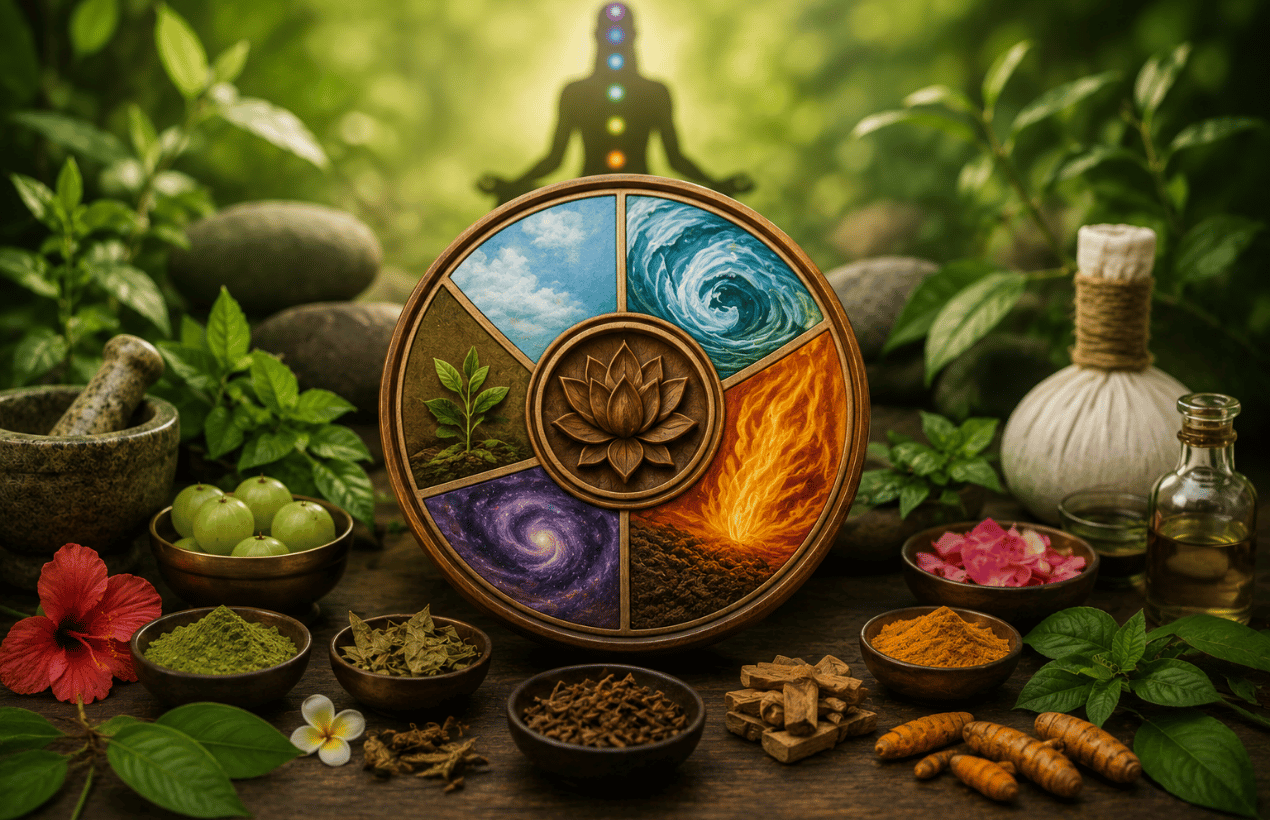
Panchamahabhootha (Sanskrit: पञ्चमहाभूत) literally means "The five great elements."
These are the foundational building blocks of all matter — including the human body, food, herbs, and the environment.
The five elements are:
- Akasha (Ākāśa) — Ether /Space
- Vayu (Vāyu) — Air
- Agni (Tejas) — Fire
- Jala (Ap) — Water
- Prithvi (Pṛthvī) — Earth
These elements are not literal substances in the chemical sense. They are principles of nature, each carrying a specific set of qualities, functions, and energetic signatures. Everything in existence —A fleeting thought, a solid stone, a passing season — each, is a unique expression of these five elements arranging themselves in a different proportion.
Disease begins when the natural proportion of these elements within a person shifts out of balance — through diet, lifestyle, climate, emotions, or time.
The Three Gunas of Each Element
Each of the five elements expresses itself through three primary attributes called Gunas (qualities):
Sattva — clarity, harmony, balance
Rajas — activity, movement, change
Tamas — inertia, density, stability
These gunas determine how the elements behave.
For example,
Agni in its sattvic form is calm, clear, and radiant;
in its rajasic form, it turns sharp, aggressive, and inflammatory;
in its tamasic form, it becomes dull, suppressed, and sluggish.
By reading these qualities, Ayurvedic practitioners gain insight into a patient’s present condition.
- What isTridosha?
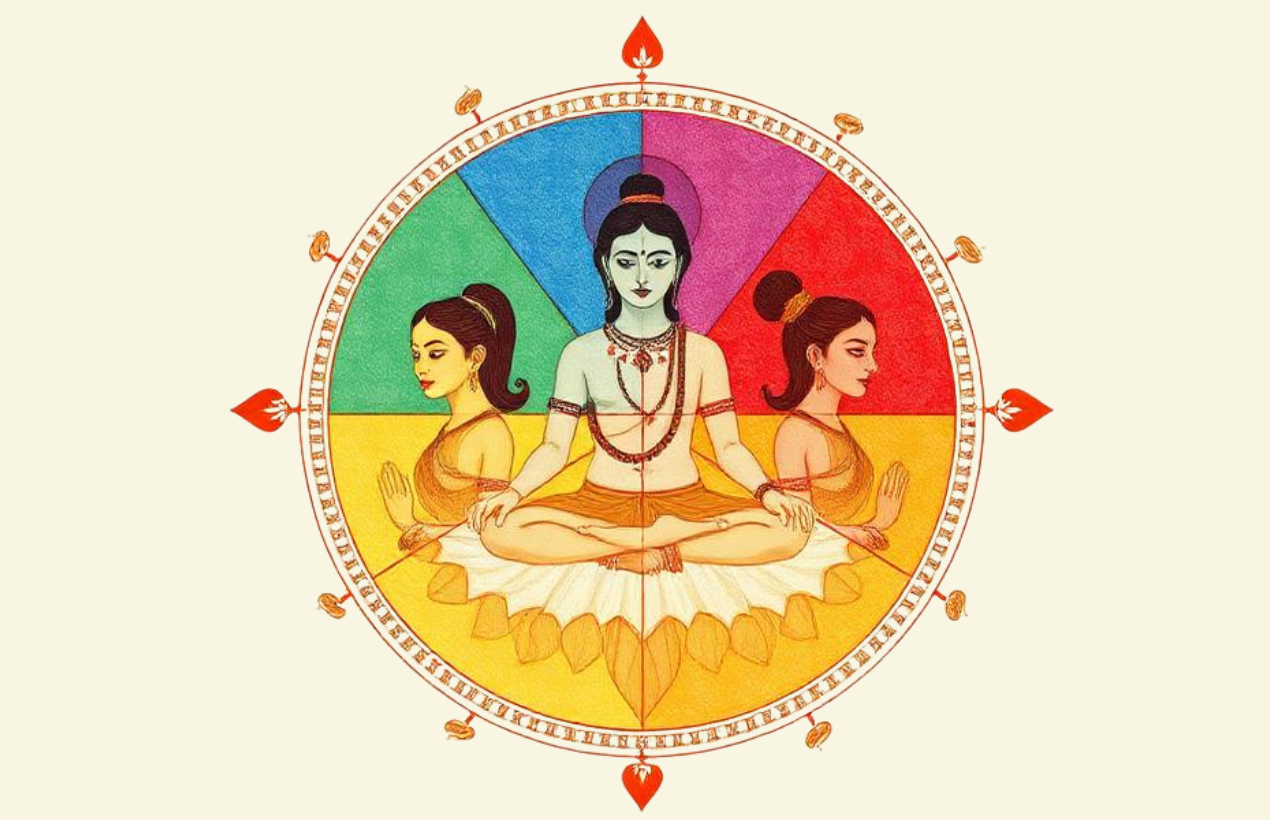
Tridosha (Sanskrit: त्रिदोष) refers to the three fundamental bio-energetic forces that govern all physical and mental processes in the body:
Vata | the principle of movement
Pitta | the principle of transformation
Kapha | the principle of structure and lubrication
Each dosha is a functional intelligence that emerges from a unique combination of the five elements and governs the body’s physical, physiological and psychological activities.
Dosha literally means "that which can go out of balance."
- Prakriti - Your Innate Elemental Constitution
One of the most powerful applications of these principles is the determination of Prakriti — your unique elemental constitution established at conception. Your Prakriti is your blueprint — it describes your natural tendencies, body type, appetite, sleep patterns, emotional responses, and disease vulnerabilities.
Each person is born with a specific ratio of the three doshas. Most people are dual-doshic (e.g., Vata-Pitta or Pitta-Kapha) or even tri-doshic (a relatively rare but well-balanced combination).
A skilled Ayurvedic practitioner reads your Prakriti through:
- Pulse diagnosis (Nadi Pariksha)
- Tongue examination (JihvaPariksha)
- Eye, skin, hair, and nail analysis
- Detailed questioning (Prashna) about digestion, sleep, energy, emotions, and history
The core principle: Treat the person, not the disease.
Two patients with the same Western diagnosis may receive entirely different Ayurvedic recommendations because their underlying elemental balance differs.
- Applications in Ayurvedic Practice
4.1 Diagnosis (Roga Pariksha)
Ayurvedic diagnosis is essentially the assessment of elemental imbalance.
An Ayurvedic practitioner identifies:
- Which dosha is aggravated (theRoga)
- Where the imbalance has lodged (the Dhatu — tissue involved)
- What stage the imbalance has reached (the Avastha — acute, chronic, etc.)
- Why the imbalance began (the Nidana — root cause)
4.2 Dietary Recommendations (Ahara)
Food is considered medicine in Ayurveda. Each taste — sweet, sour, salty, pungent, bitter, astringent — carries elemental properties that increase or decrease specific doshas.
4.3 Lifestyle and Daily Routine (Dinacharya)
Ayurveda prescribes a daily routine aligned with the dominant dosha and current imbalance:
- Abhyanga (self-massage with warm oil)— pacifies Vata and Kapha
- Tongue scraping— removes Ama (toxins)
- Pranayama (breath work)— balances Vata and Pitta
- Meditation— calms all three doshas
- Sleep schedule— early to bed and early to rise (Kapha and Pitta time)
- Exercise— gentle for Vata, moderate for Pitta, vigorous for Kapha
4.4 Herbs and Formulations
Herbs are classified according to their elemental qualities and energetic actions, which help in restoring balance to the doshas.
- Warming herbs (ginger, cinnamon, black pepper)— pacify Vata and Kapha
- Cooling herbs (fennel, coriander, aloe vera)— pacify Pitta
- Heavy, oily herbs (ashwagandha,shatavari) — pacify Vata
- Light, drying herbs (guggul, turmeric)— reduce Kapha
Ayurvedic formulations are custom-tailored to balance the dosha and restore the health of the affected tissues.
4.5 Panchakarma (Detoxification)
When doshic imbalance becomes deep rooted or chronic, Ayurveda prescribes Panchakarma — five major cleansing therapies that systematically remove accumulated Ama (toxins) and excess dosha from the body:
- Vamana (therapeutic emesis)— removes excess Kapha
- Virechana(purgation) — removes excess Pitta
- Basti (medicated enema)— pacifies Vata
- Nasya (nasal administration)— clears head and sinuses
- Raktamokshana(bloodletting) — purifies blood (rarely used today)
Each therapy is tailored according to the elemental nature of the underlying imbalance.
- The Connection Between Elements and Mind
Ayurveda views the mind as an extension of the five elements. The three mental qualities (Manasika Gunas) — Sattva, Rajas, and Tamas — correspond to:
- Sattva (clarity)— balanced expression of all elements
- Rajas (activity)— excess Vata and Pitta
- Tamas (inertia)— excess Kapha
A Sattvic mind is clear, compassionate, and steady.
A Rajasic mind is restless and driven.
A Tamasic mind is dull and resistant.
Ayurvedic practice addresses all three Gunas through diet, lifestyle, herbs, and spiritual practices.
- Elemental Rhythms: Time of Day, Seasons, and Life Stages
Each dosha dominates during specific times, and awareness of these rhythms helps maintain balance.
- The Path Forward: Living Elementally
The genius of Ayurveda is that it doesn't ask you to fight your nature — it asks you to live in alignment with it. By understanding your elemental constitution and the elemental nature of your food, environment, and routines, you can:
- Prevent disease before it begins
- Strengthen digestion (the root of health, as per Ayurveda)
- Improve energy, sleep, and emotional balance
- Slow aging and increase vitality
- Live in harmony with nature's cycles
The five elements and the three doshas are not abstract philosophy — they are practical tools, validated over millennia, for living a long, healthy and meaningful life.
Conclusion
Panchamahabhootha teaches us that we are not separate from the universe — we are the universe, in a small, walking, breathing form. Tridosha translates that truth into a clinical and personal framework for understanding how the elements express through our bodies and minds.
When you know your dosha, you know yourself.
When you know the elements, you know the world.
When you balance both, you walk the path Ayurveda has honored and upheld for 5,000 years —
Swasthasya Swasthya Rakshanam —
protecting the health of the healthy
&
Aturasya Vikara Prashamanam —
healing the disease of the sick